
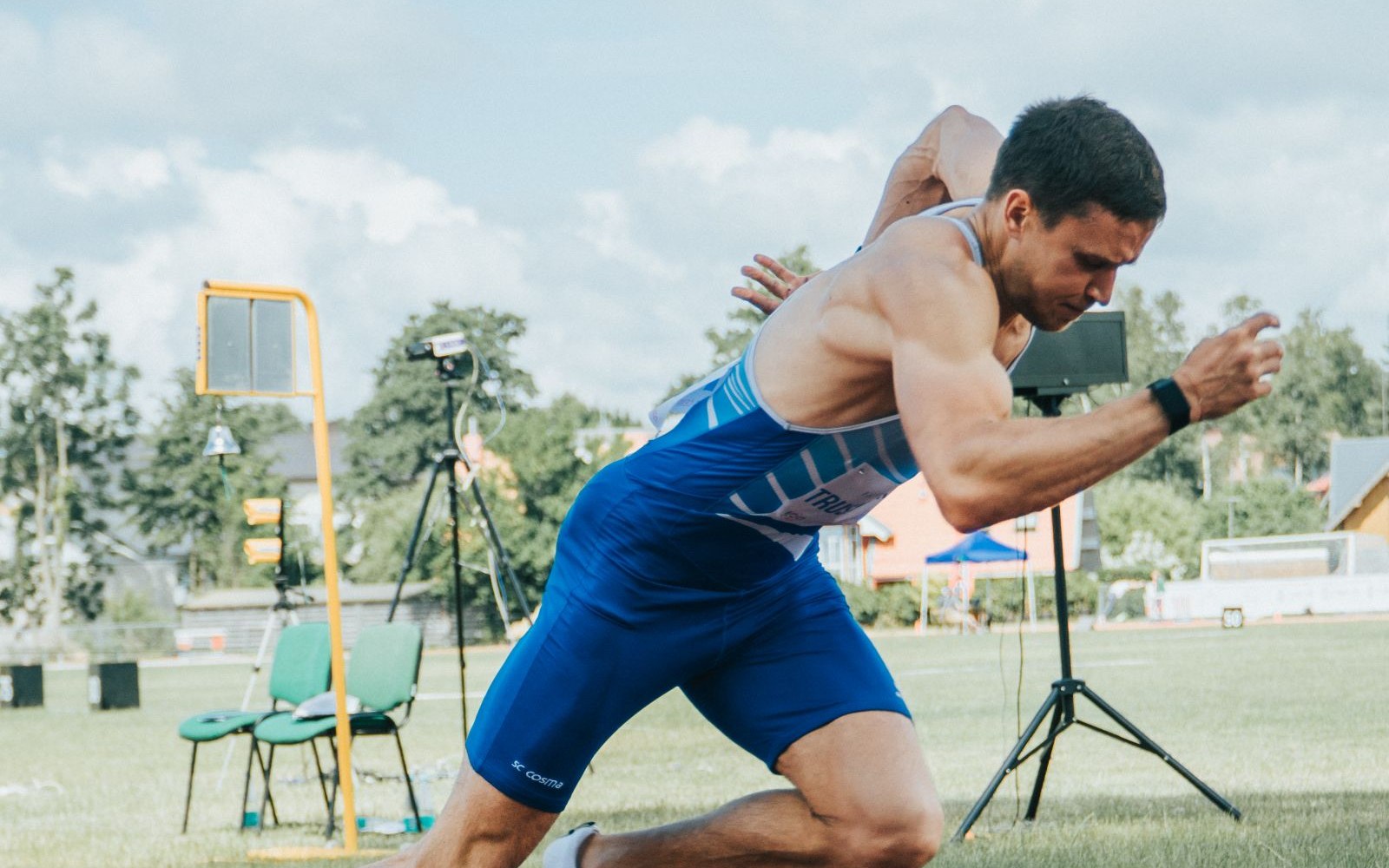
Sports, schools, workplaces and seniors
We do not diagnose. We record numbers.
In training facilities, schools, workplaces and community centres, 4DEYE performs no medical act. Like a body-composition analyser, it records posture and posture type as numbers in three seconds, then guides matched exercise. Out-of-range results go to clinics and hospitals for diagnosis and treatment.
- Posture measurement
- 3 seconds
- Posture type classification
- Forward head, rounded shoulders and more
- Public programme
- 14,000 sessions, Gyeonggi Office of Education
- Medical judgement
- None
4DEYE Dx + smart training
Measure for prevention, follow through in a personal app
A one-page report alone changes nothing. 4DEYE identifies posture problems, links each person on the spot to app exercises for their posture type, and lets a few staff track hundreds of people.
- 4DEYE Dx
3-second posture measurement
- 4DEYE Dx
Posture type classification
- 4DEYE Dx
Results report
- Smart training
Smart training
- Smart training
Tracking change
Tracked results become the baseline for the next measurement, closing the loop.
Measurement for prevention
In three seconds, posture is recorded as numbers and its type classified. No medical judgement — only where a person sits against reference values, and which type.
Smart training for follow-through
Exercise matched to the posture type goes to a personal app; completion and posture change return to the staff screen.
Same engine, run differently. In clinics and hospitals it is an MFDS-approved medical device used for assessment and prescription. In training facilities, schools, workplaces and community centres it runs as measurement and training, not a medical act. People with out-of-range results are referred to local clinics and hospitals — diagnosis and treatment belong to medical professionals.
Sports
Spot injury risk on the training floor
The lower limbs are the most common site of sports injury. 4DEYE measures joint movement on the training floor with five cameras and no markers. An international journal study found it accurate and reliable for rehabilitation and for monitoring athletes.
- 0.75–0.94
- Agreement with VICON (ICC) — per the paper below
- Indoors and outdoors
- Measures even in bright conditions
- Y-balance · squat
- Standard injury-risk screening movements
4DEYE Dx · Measurement
Posture and screening movements such as Y-balance and overhead squat are measured on the training floor, with imbalance and compensation recorded as numbers.
Smart training · Follow-through
Exercise targeting the measured imbalance goes to the athlete’s app; the camera scores it, and the trainer tracks completion and change.
- 01
Measured right on the training floor
No lab booking or extra equipment — five cameras measure in the team’s own training space. The paper confirmed it works in bright indoor and outdoor settings.
- 02
Screening movements sports medicine already uses
It tests standard injury-risk screens such as the Y-balance test and overhead squat.
- 03
Handed to the team doctor and trainer
4DEYE only records imbalance and compensation as numbers. Injury status and return to play are for the team doctor and sports medicine specialists to judge.
- 04
Tracked on the same yardstick all season
Measured the same way from pre-season screening to the return-to-play decision, so a season’s change shows as one graph.
Our SCI paper · clinical evidence
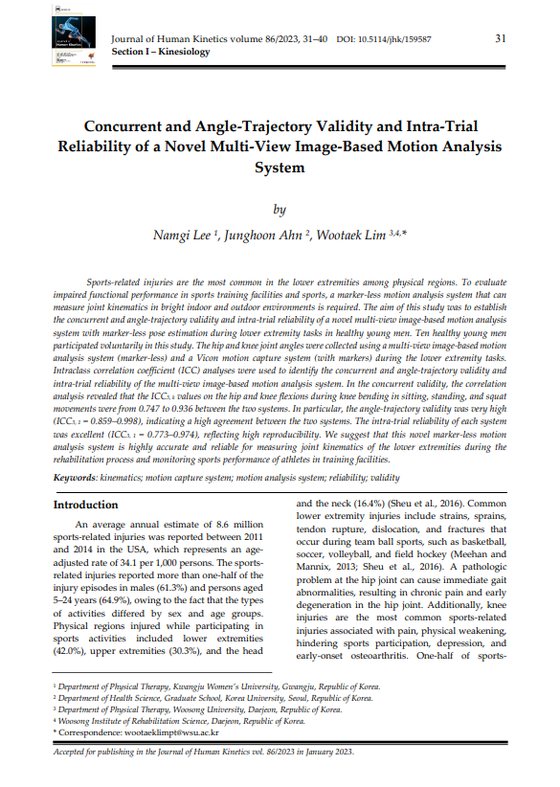
Journal of Human Kinetics (SCI) · 2023
Concurrent and Angle-Trajectory Validity and Intra-Trial Reliability of a Novel Multi-View Image-Based Motion Analysis System
Show design, result and meaningHide summary
- Design
- 10 healthy adult men · markerless multi-view system vs VICON, simultaneously · lower-limb movements such as sitting, standing and squatting
- Result
- Concurrent validity was ICC 0.75–0.94, angle-trajectory agreement ICC 0.86–1.00, and intra-trial reliability ICC 0.77–0.97.
- Meaning
- The authors concluded the system is accurate and reliable for rehabilitation and for monitoring athletes in training facilities.
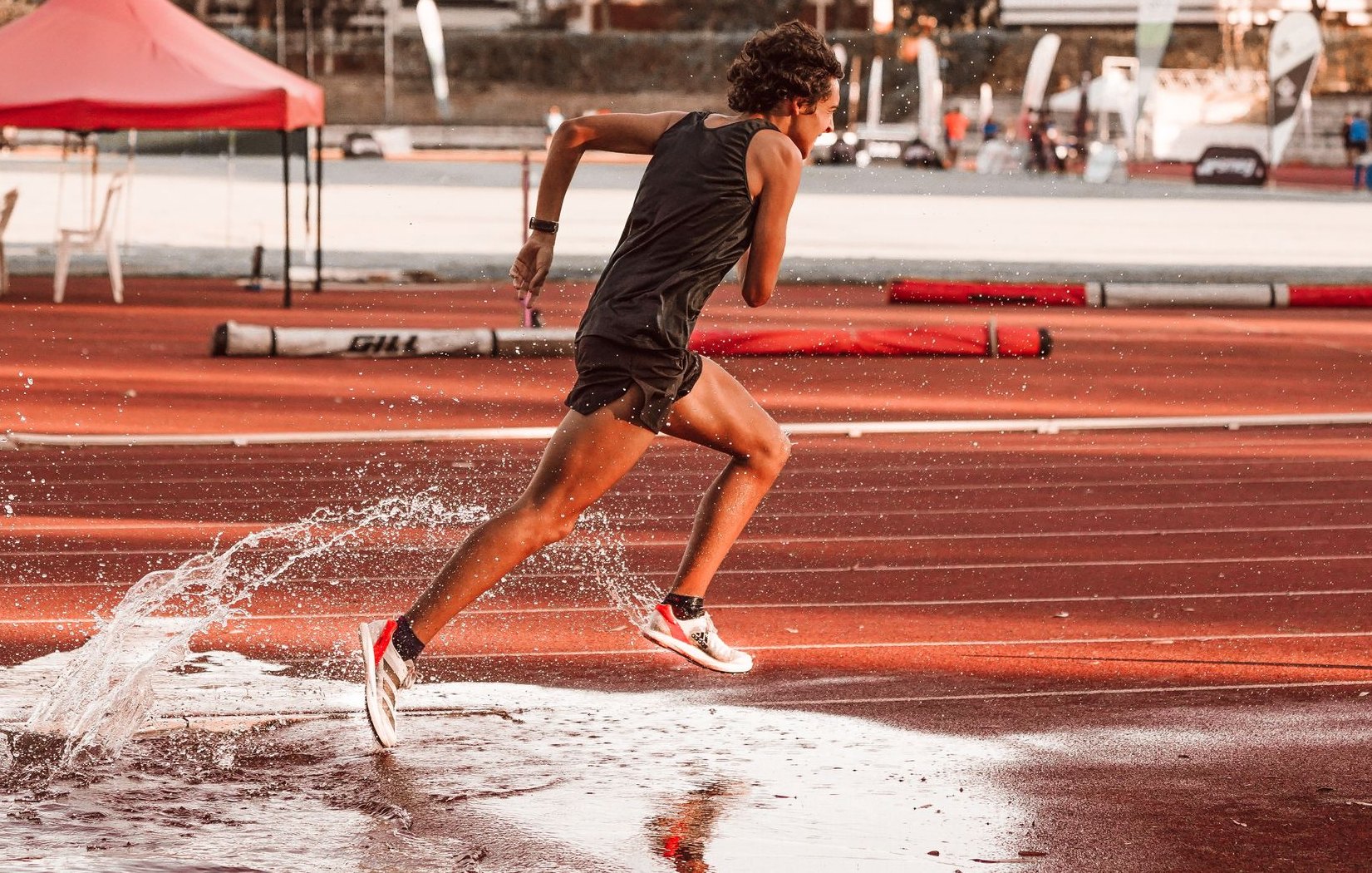
Schools · adolescents
Identify posture problems, then follow through in the app
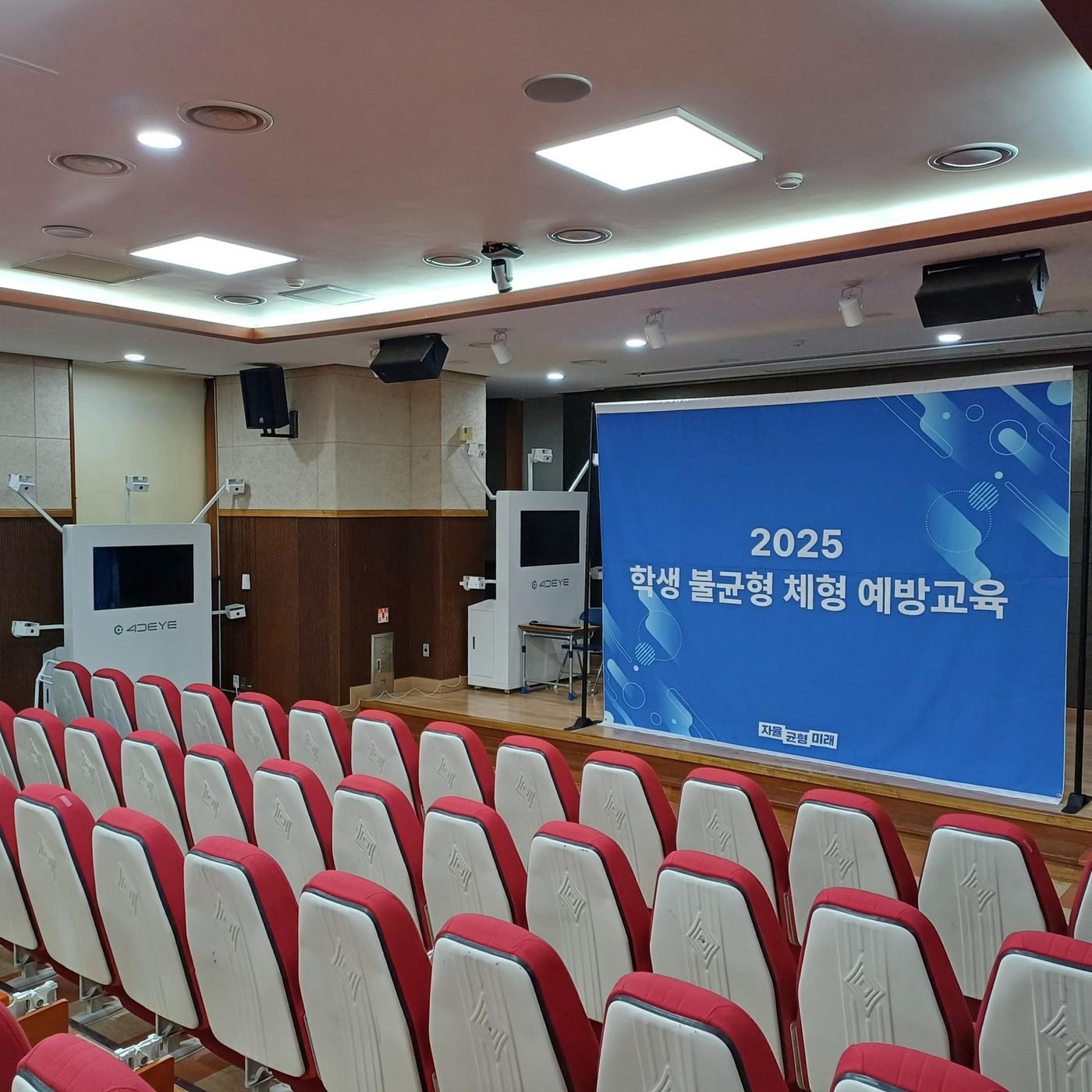
School health exams come only in grades 1, 4, 7 and 10, but posture keeps changing in between. 4DEYE measures each student’s posture and type in three seconds; students with problems follow a personalized exercise app, and change is checked at the next measurement.
- 14,000
- Sessions run for the Gyeonggi Office of Education
- 3 sec
- Posture measurement per student
- 41.6%
- Teenagers’ share of patients treated for scoliosis
4DEYE Dx · Measurement
A three-second check per student measures posture and classifies types such as forward head and rounded shoulders, with growth trends for growing students.
Smart training · Follow-through
Corrective exercise for each posture type goes to the student’s app; teachers see completion and posture change on one screen.
- 01
Three seconds, just standing
No markers or changing — students just stand in uniform. At three seconds each, it barely interrupts lessons and fits in the gym or nurse’s office.
- 02
Same yardstick, year after year
Data builds up the same way each year, showing each student’s change and the school-wide distribution — results you can report in numbers.
- 03
No medical judgement
Results show only posture values and type. Conditions such as scoliosis are for clinics to judge; a medical visit is recommended when needed.
Our SCI paper · clinical evidence
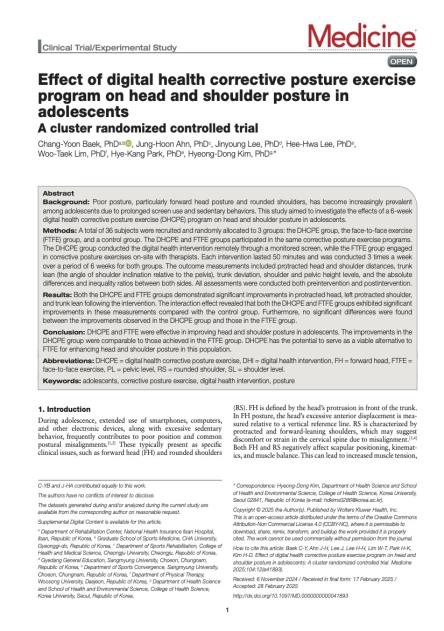
Medicine (SCI) · 2025
Effect of digital health corrective posture exercise program on head and shoulder posture in adolescents: A cluster randomized controlled trial
Show design, result and meaningHide summary
- Design
- 36 adolescents randomized to digital corrective exercise, in-person therapist-led exercise or control. 50 minutes, three times a week, for six weeks.
- Result
- Head and shoulder posture (forward head, rounded shoulders) improved in the digital group about as much as in the therapist-led group.
- Meaning
- The app can deliver the same level of posture correction without a therapist present — evidence for school-wide management.
Teenage share of scoliosis patients: 2021 national health insurance treatment statistics (39,482 of 94,845). “Identifying” is based on posture values and type; 4DEYE does not diagnose scoliosis or any other disease.
Workplaces · occupational health
Numbers for your three-yearly hazard survey
Article 657 of Korea’s Rules on Occupational Safety and Health Standards requires workplaces with musculoskeletal-burden work to run a hazard survey every three years. Its item on “signs and symptoms of work-related musculoskeletal disorders” relied on questionnaires and interviews — 4DEYE adds a measured value.
- 3 years
- Statutory cycle · first survey within 1 year for new workplaces
- 3 sec
- Posture check per worker
- By team and role
- Group distribution report
4DEYE Dx · Measurement
A three-second check per worker records posture values and type; distributions by team and role show which processes carry the load.
Smart training · Follow-through
Stretching and exercise for each posture type go to the worker’s app; the health manager tracks participation and change at the next measurement.
- 01
A measured value beside the questionnaire
Beside complaints like “my shoulder hurts”, posture values and type are now on record — grounds to make the case for improvements.
- 02
See which processes carry the load
See distributions by team and role, not just individuals. A pattern repeating across the same job is a process problem, not a people problem.
- 03
Three seconds added to the health checkup
Add it as one item to your existing health checkup or safety training — no new programme needed.
- 04
Occupational physicians and clinics make the call
4DEYE does not judge fitness for work or work-related injury. Workers who may need action are referred via the health manager and occupational physician to a clinic.
Survey methods and forms follow the Ministry of Employment and Labor notice. 4DEYE does not replace the survey; it adds quantitative data to the worker-condition section.

Seniors · community care
Falls are not accidents. They build up over time.
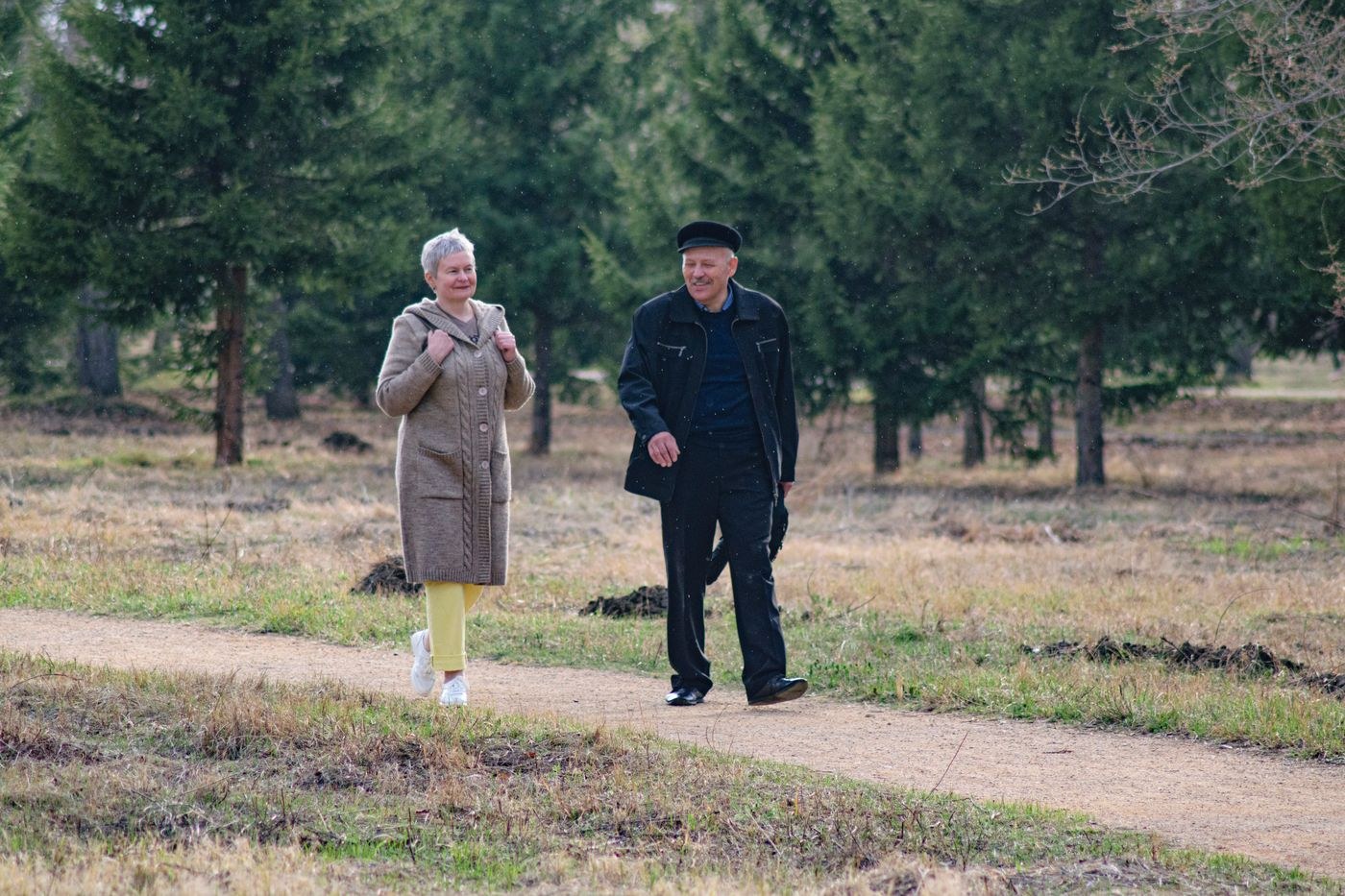
In the KDCA hospital discharge in-depth injury survey, falls caused over half of injury admissions, and three in four fall injuries at age 65+ were fractures. Measuring after a fall is too late, so we record declining alignment and balance early and manage them with matched exercise.
- 51.6%
- Falls among causes of injury admission · 2023
- 75%
- Fractures among fall injuries, age 65 and over
- 3 sec
- Posture measurement per older adult
4DEYE Dx · Measurement
A three-second check at welfare and senior centres measures alignment and left–right balance, comparing six months ago with now.
Smart training · Follow-through
Exercise matched to each older adult’s posture goes to the app; family and care workers track completion and change.
- 01
It runs outside the hospital
The same measurement works at welfare centres, senior centres and local health centres — no hospital trip needed.
- 02
Alignment and left–right balance become numbers
Alignment and balance are recorded and posture type classified. “They seem a little stooped lately” becomes a trackable indicator.
- 03
Family sees the same screen
Older adults, family and care workers see the same results, with six months ago and today side by side.
- 04
We do not predict falls
We give no “probability of falling”. We record how balance and alignment change; interpretation and medical action are for clinicians.
Source: KDCA hospital discharge in-depth injury survey (2023). 4DEYE does not diagnose or predict fall risk; it quantifies posture and movement.
Features by use
Clinical motion analysis is different, feature by feature
The wellness edition for sports, schools, industry and senior care involves no medical judgement: 4DEYE Dx measures posture, posture type and growth, smart training manages exercise, and sports settings add injury-risk screening. Joint-by-joint motion analysis, clinical use and claims, and clinician-prescribed rehab management are clinical edition only.
| Feature | Clinical edition MFDS-approved medical device · 4DEYE Dx Clinics and hospitals · rehab medicine · orthopedics · physiotherapy | Wellness edition For sports, schools, industry and seniors · non-medical Athletes · students · workers · older adults |
|---|---|---|
| Motion analysis · clinical use | ||
Single- and multi-joint motion analysis Range of motion · compensation · left–right asymmetry | Included | Not included |
Movement screening Injury-risk screens such as Y-balance and overhead squat · sports only | Included | Included |
Tight and weak muscles · risk grade Findings that support clinical judgement | Included | Not included |
Hand function test Detailed finger, wrist and elbow analysis · separate attachment | Separate subscription | Not included |
Report linked to PACS and claims Connected to medical records and billing | Included | Not included |
| Treatment · follow-through | ||
Clinician-prescribed rehab management Medical institutions only · confirmatory trial evidence | Included | Not included |
Smart training Personal exercise app matched to results · camera scoring · adherence tracking | Included | Included |
| Posture | ||
Current posture measurement 3 seconds · coronal, sagittal and transverse alignment | Included | Included |
Posture type classification Forward head · rounded shoulders · pelvic tilt and more | Included | Included |
Measurement data · trends Individual and group records on one yardstick | Included | Included |
| Growth · vital signs | ||
Growth prediction model Growth trends for students · in use in schools | Included | Included |
Heart rate · respiratory rate Contactless, via remote photoplethysmography (rPPG) from camera video | Coming soon | Coming soon |
Heart rate variability (HRV) · stress index Based on LF/HF and SDNN | Coming soon | Coming soon |
Blood pressure · oxygen saturation Collected during the same session | Coming soon | Coming soon |
Clinical edition
MFDS-approved medical device · 4DEYE Dx
Wellness edition
For sports, schools, industry and seniors · non-medical
Motion analysis · clinical use
Single- and multi-joint motion analysis
Range of motion · compensation · left–right asymmetry
IncludedNot includedMovement screening
Injury-risk screens such as Y-balance and overhead squat · sports only
IncludedIncludedTight and weak muscles · risk grade
Findings that support clinical judgement
IncludedNot includedHand function test
Detailed finger, wrist and elbow analysis · separate attachment
Separate subscriptionNot includedReport linked to PACS and claims
Connected to medical records and billing
IncludedNot included
Treatment · follow-through
Clinician-prescribed rehab management
Medical institutions only · confirmatory trial evidence
IncludedNot includedSmart training
Personal exercise app matched to results · camera scoring · adherence tracking
IncludedIncluded
Posture
Current posture measurement
3 seconds · coronal, sagittal and transverse alignment
IncludedIncludedPosture type classification
Forward head · rounded shoulders · pelvic tilt and more
IncludedIncludedMeasurement data · trends
Individual and group records on one yardstick
IncludedIncluded
Growth · vital signs
Growth prediction model
Growth trends for students · in use in schools
IncludedIncludedHeart rate · respiratory rate
Contactless, via remote photoplethysmography (rPPG) from camera video
Coming soonComing soonHeart rate variability (HRV) · stress index
Based on LF/HF and SDNN
Coming soonComing soonBlood pressure · oxygen saturation
Collected during the same session
Coming soonComing soon
Contactless vital signs are developed and launching soon; the wellness edition shows them as reference indicators without medical judgement. Hand function testing needs a separate attachment and subscription.
Training facilities, schools, workplaces, community centres — we fit operations and report formats to your setting. Out-of-range results are referred to local clinics and hospitals.
Also for
Measurement and follow-up designed for your setting
Training facilities, schools, workplaces, senior centres. See a live measurement, plus an operating model and report format for your group.