
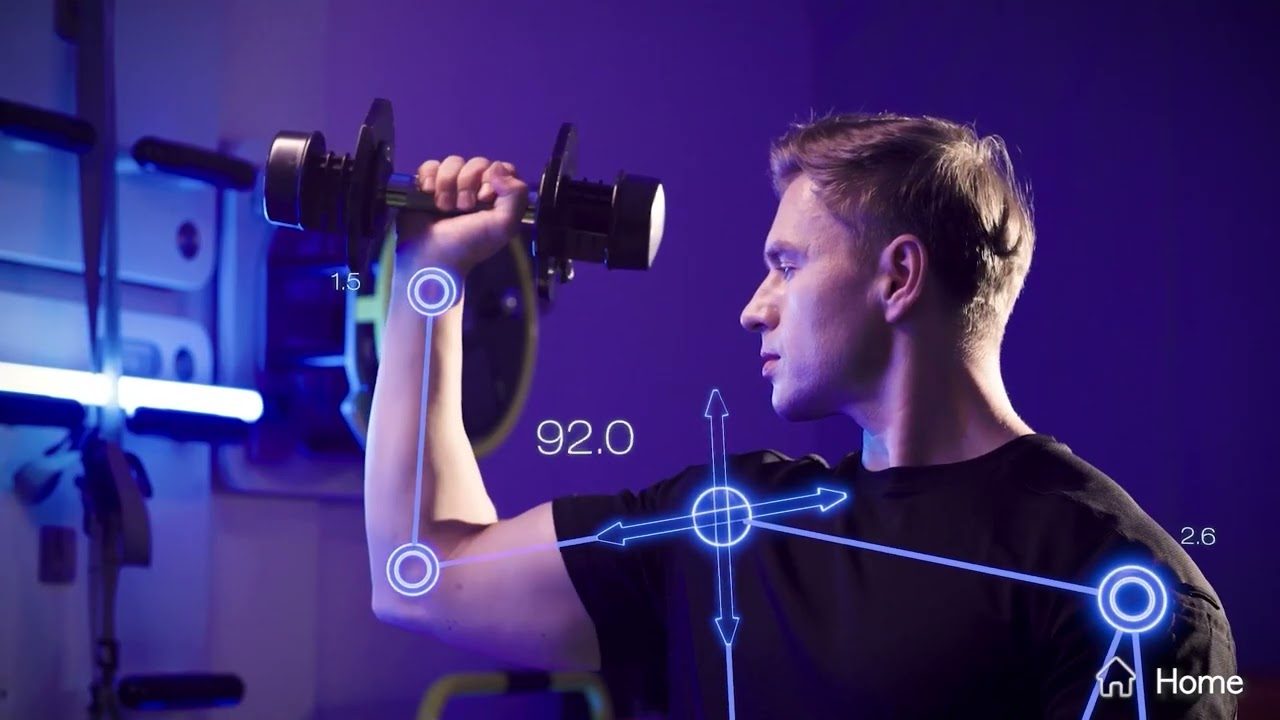
AI musculoskeletal assessment · digital rehab
An X-ray sees the body at rest.4DEYE sees it in motion.
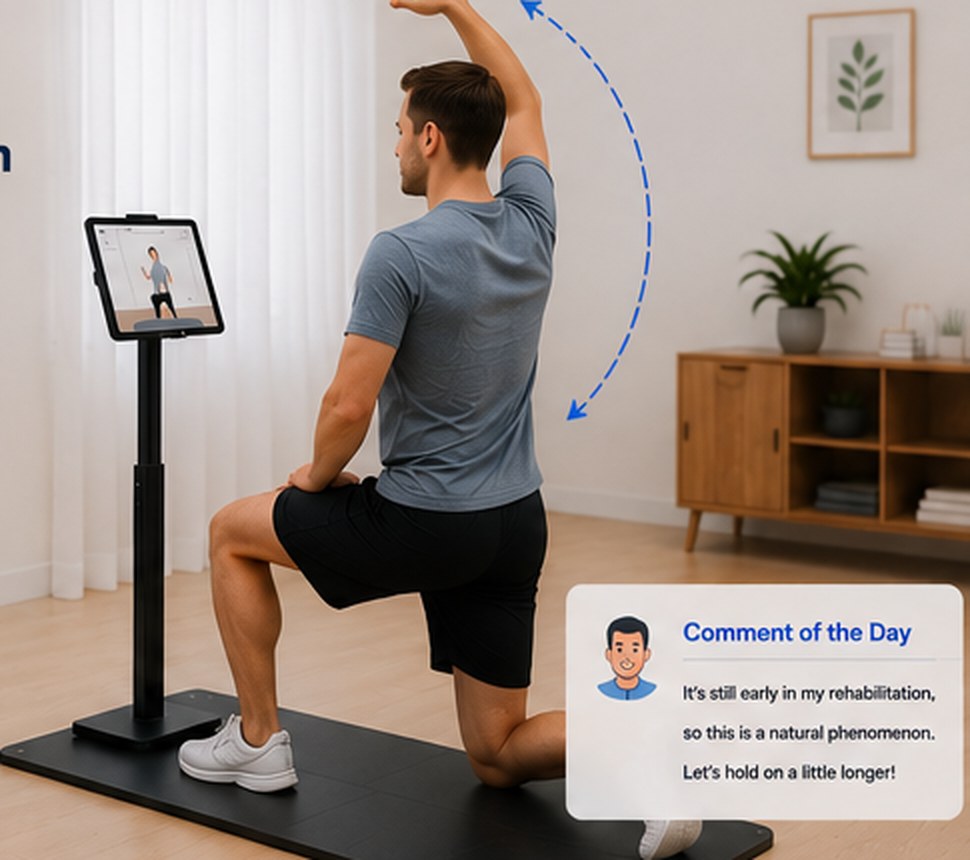
One simple arm raise. In five minutes, numbers show where the joint goes off track and which muscles compensate.
MFDS Class II medical device
2024 · billable
Running at 26 sites
Incl. Korea's largest spine & joint hospital
6 SCI papers
5 validity · 1 treatment effect
GMP · ISO 13485
Quality system audited
Payback in 3 weeks to 3 months
From real assessment volumes
The gap
Musculoskeletal pain care has a gap in functional diagnosis and rehab.
No preventive screening
No check-up catches musculoskeletal problems before pain starts.
Imaging only shows structure
X-ray and MRI show damage, not the real cause: joint dysfunction.
Short-term symptom relief
Symptoms ease for a while, but the functional cause remains, so pain returns.
Care stops outside the hospital
Discharged patients struggle alone. Old habits return and progress is lost.
- Disc abnormalities with no pain
- 87.6%
- Spine 2015
- When the injection wears off
- 6 weeks
- KSSTA 2024
- Chronic knee pain becoming arthritis
- 31%
- AJSM 2017
- Home exercise dropout
- 50%
- JMIR 2018
From one simple motion, 4DEYE measures four things.
Range of motion (ROM)
Does the joint move enough?
e.g. A stiff ankle breaks down posture.
Ref) Bennell 1998 · Konor 2012
Alignment
Is the joint straight on its axis?
e.g. Knee collapsing inward: ACL injury risk ↑
Ref) Hewett 2005
Asymmetry
Are left and right in balance?
e.g. Favouring one side builds up load
Ref) Plisky 2006
Compensation
Is another region doing the work instead?
e.g. Weak glutes make the lower back take over
Ref) Sahrmann 2002
Real screens
One assessment is just the start
The assessment finds compensation and joint dysfunction, and targeted rehab is prescribed. Home results set the baseline for the next assessment. A loop, not just a device.
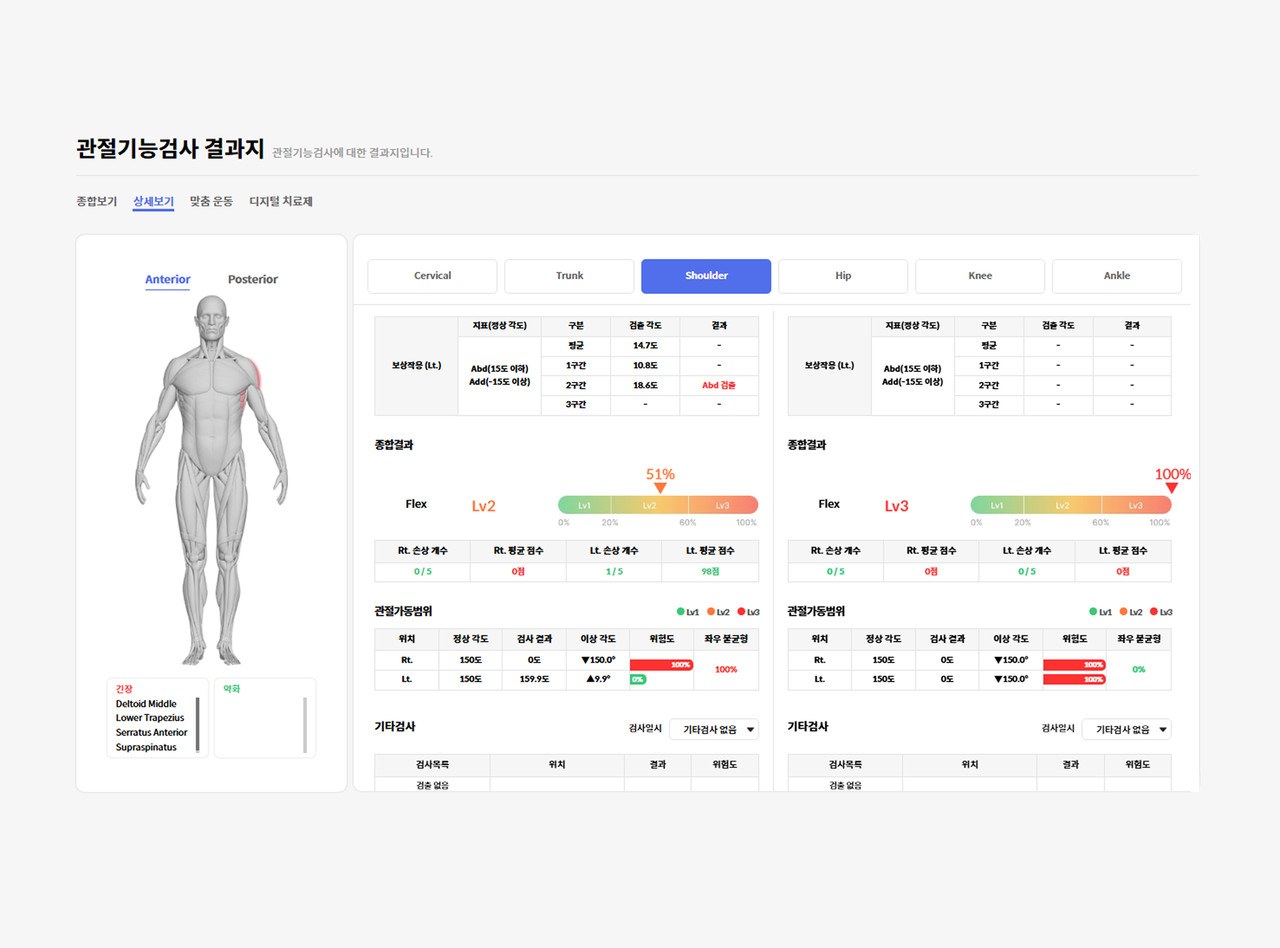
4DEYEDxAssessment · hospital
- AI screening
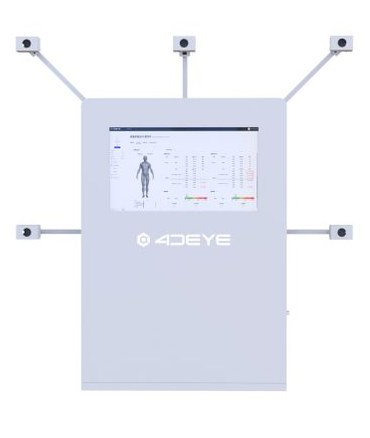
- AI analysis & prescription
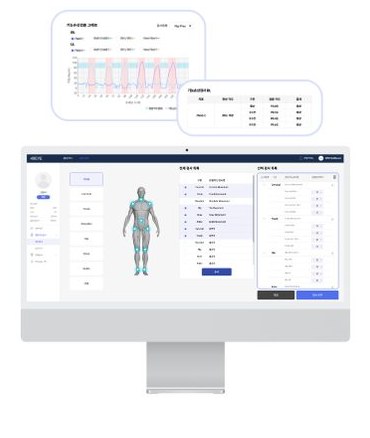
- Report
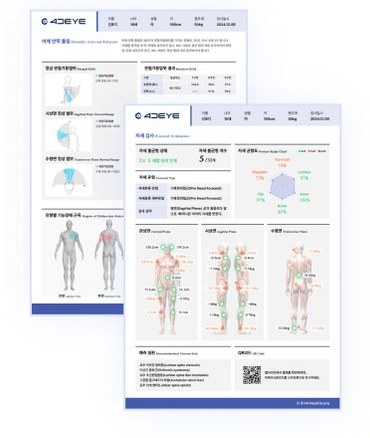
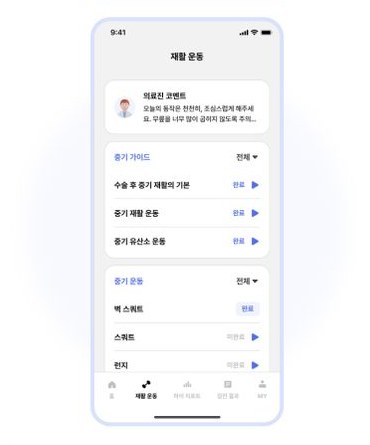
4DEYEDTxRehab · home
- Mobile rehab
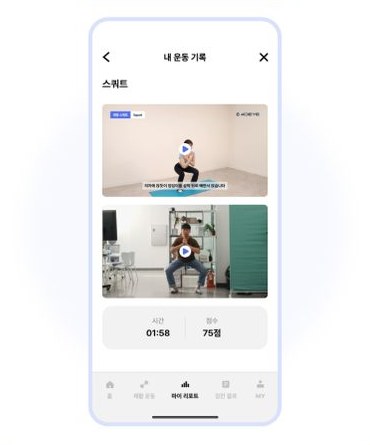
- Live monitoring

Three ways to assess joints body-wide
Single-joint motion analysis
The core test: one simple motion shows if a joint leaves its path.
Every joint, shoulder to ankle
Multi-joint motion analysis
Shows, joint by joint, where the body breaks down in movements like an overhead squat.
Athletes · groups
Static posture
Checks standing alignment in 3D, in a three-second capture.
Screening · pre-checks · three seconds
Hand function
Detailed analysis of fingers, wrist and elbow. Needs a dedicated attachment; separate subscription.
Physician orders, physical therapist runs. Five minutes per assessment, half a day of training. A one-page PDF links to PACS and insurance claims.
4DEYE DTx
Rehab usually ends at discharge
No one knows what exercise was done, and the next visit brings only “a bit better.” 4DEYE DTx fills that gap with data. Unlike exercise apps, its effect was shown in a confirmatory trial.
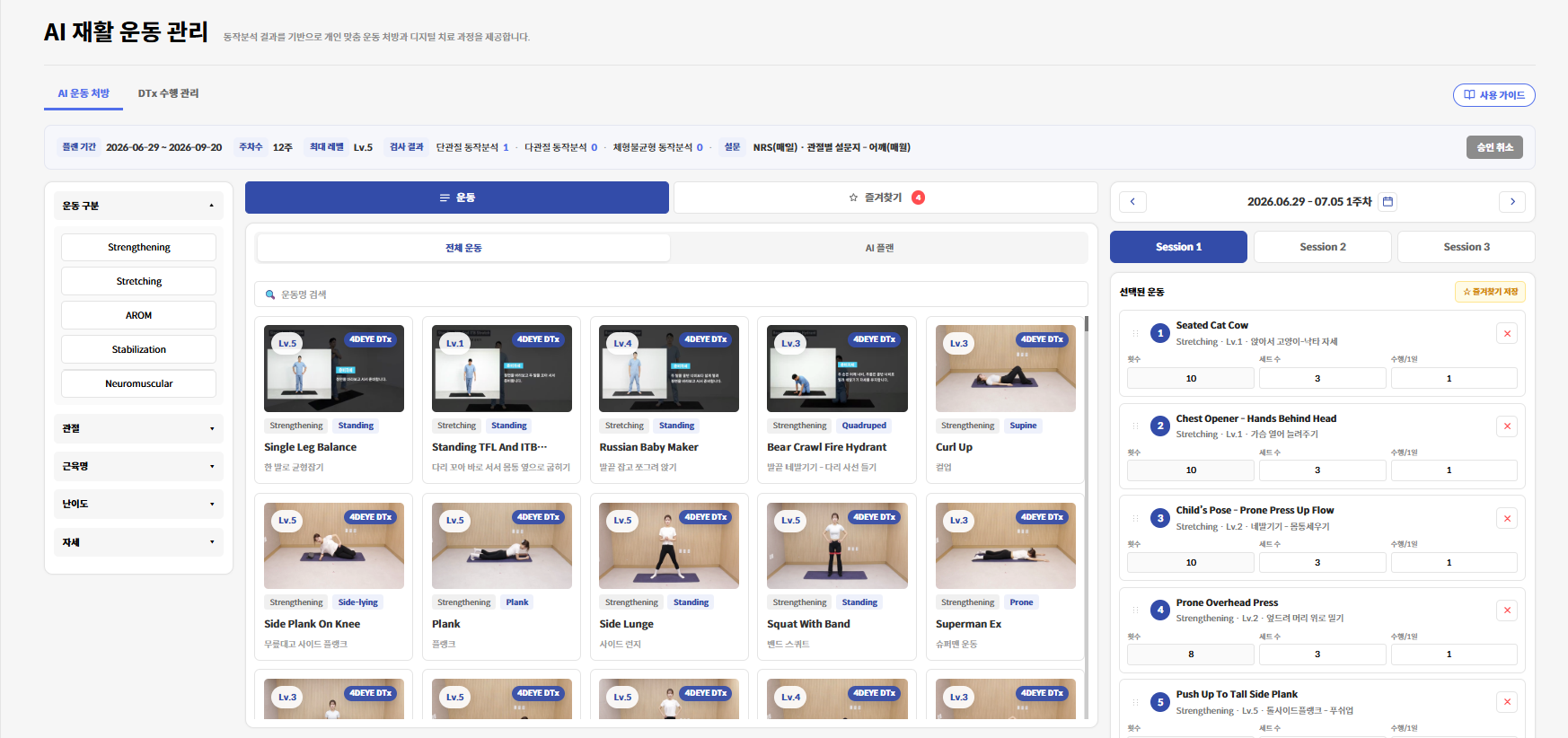
The prescription travels
Pick exercises to match the results, set sets, reps and frequency, and the plan goes to the patient’s phone. No paper handouts.
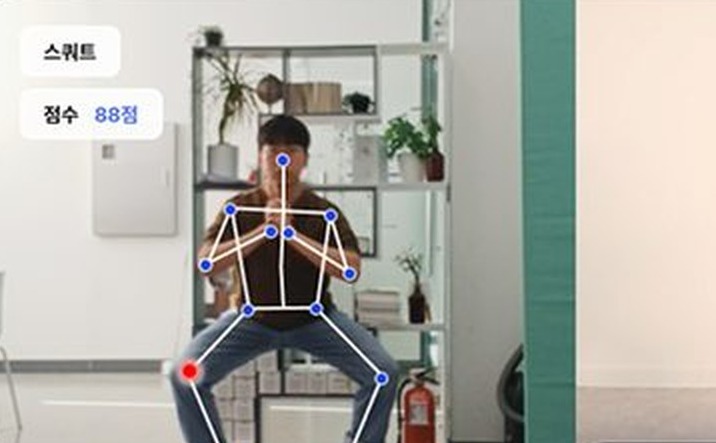
A camera scores the motion
At home, the camera scores posture accuracy and corrects errors on the spot.
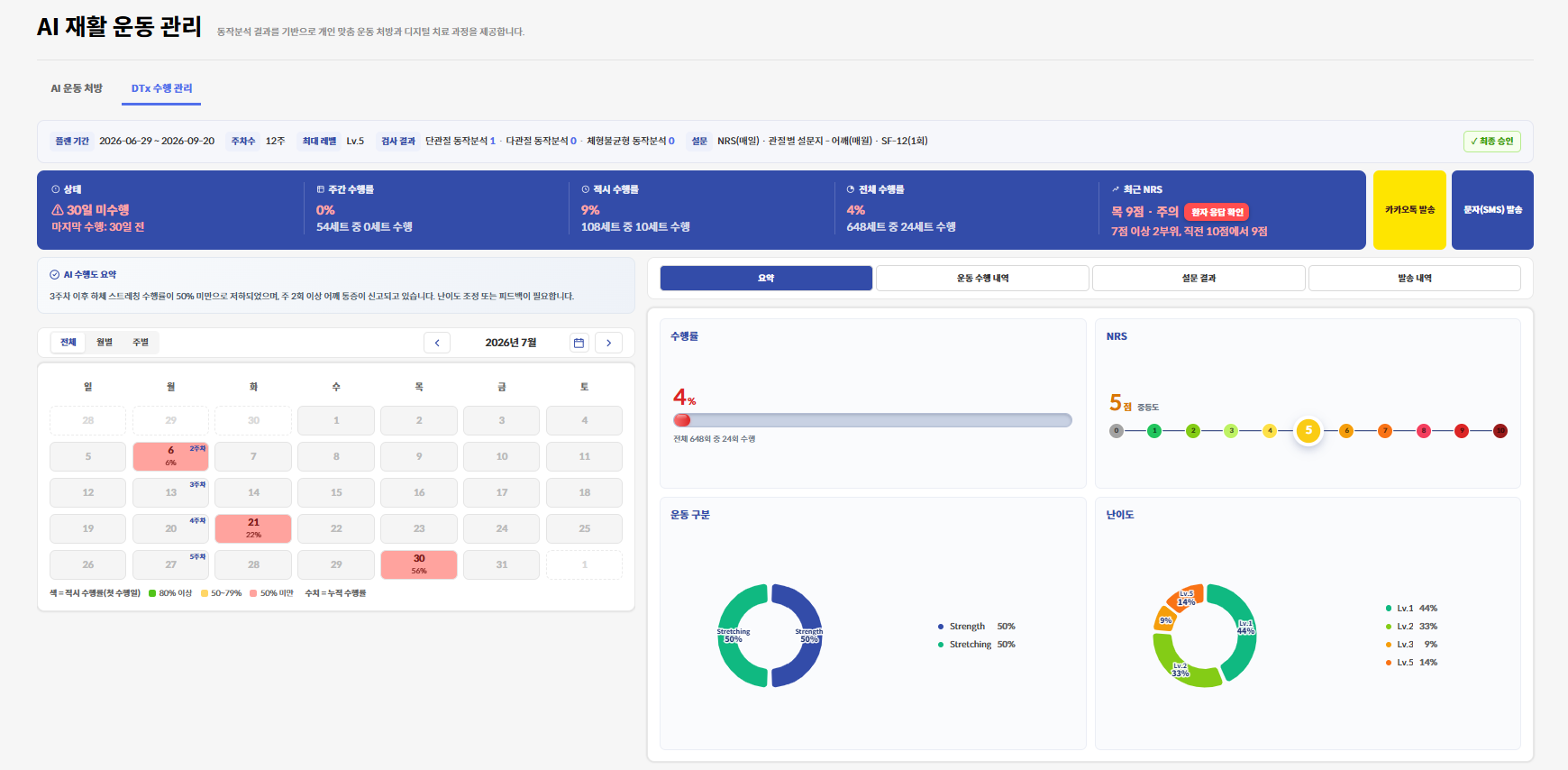
You see who slipped
Adherence and pain (NRS) trends on one screen. AI flags drop-offs; send a reminder by KakaoTalk or text.
Evidence on our own product
Accuracy first, then effect — proven in order
Five papers show accurate, repeatable measurement against VICON, from single joints to whole-body movement. The sixth shows exercise content built on it corrects posture.
Same motion, VICON vs. 4DEYE: how close are the values?
ICC near 1.00 means values match VICON. ≥ 0.75 is "good"; ≥ 0.90 is "excellent".
Poor0.5
Moderate0.75
Good0.9
Excellent
Concurrent validity
ICC 0.75–0.99
Hip, knee and trunk measured together · Applied Sciences 2024
Angle-trajectory validity
ICC 0.86–1.00
Sitting, standing and squats · Journal of Human Kinetics 2023
Test–retest reliability
ICC 0.68–0.99
Same motion, same value on retest · Sensors 2023 · JHK 2023
ICC near 1.00 means close agreement with VICON — not that a treatment works. We keep the two claims separate.
How each one measures
VICON
- Reflective markers on every joint
- Infrared cameras in a dedicated lab
- 20–30 min setup
4DEYE
- Nothing attached to the body
- Five RGB cameras, existing rehab room
- 5-minute test
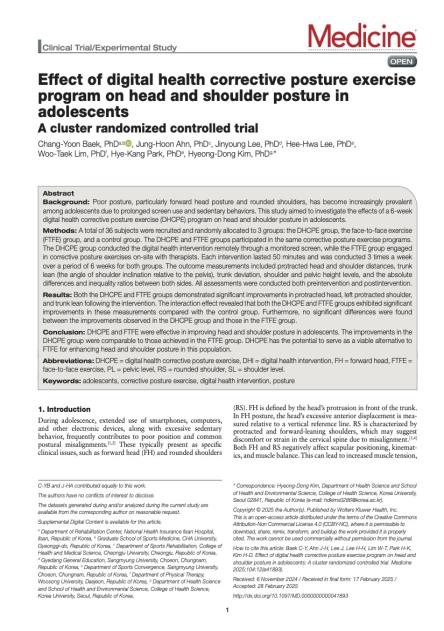
Beyond measurement — effect, too
In a cluster RCT of 36 adolescents (Medicine, IF 1.4), digital exercise content alone improved posture about as much as in-person therapist coaching.
Knee pain confirmatory trial, on our product
Prof. Lee Byung-hoon’s team, Orthopaedic Surgery, Gachon University Gil Medical Center · Single-centre · assessor-blinded · parallel-group · ITT · n=151 (78 vs 73) · 12 weeks
Primary endpoint · KOOS-12 function score
+5.24P < .001
Secondary outcomes improved too
- Quality of life (SF-12 physical) +7.35 · mental +5.83
- Knee flexion ROM +3.08°
- Adherence 81.4% (control 77.2%)
IRB GCIRB2025-212 · CRIS KCT0011905
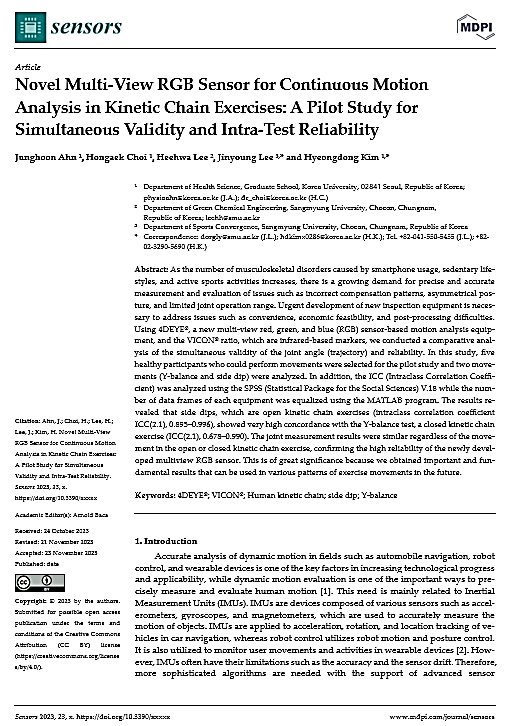
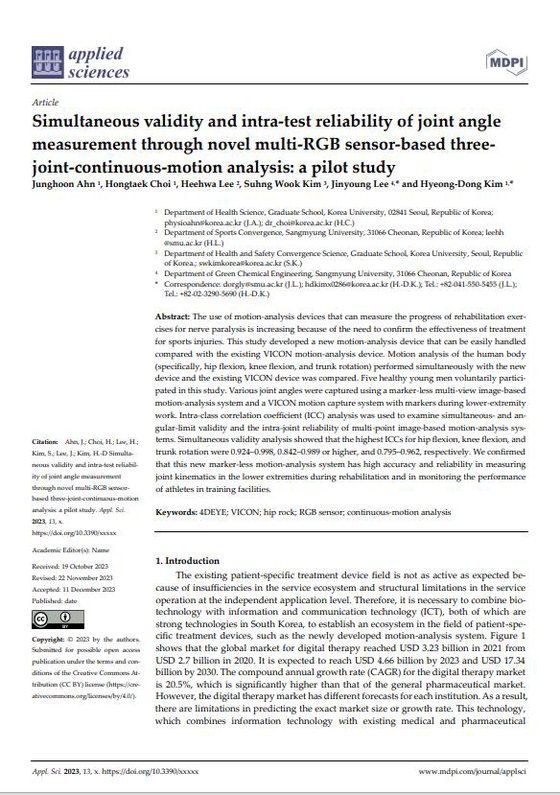
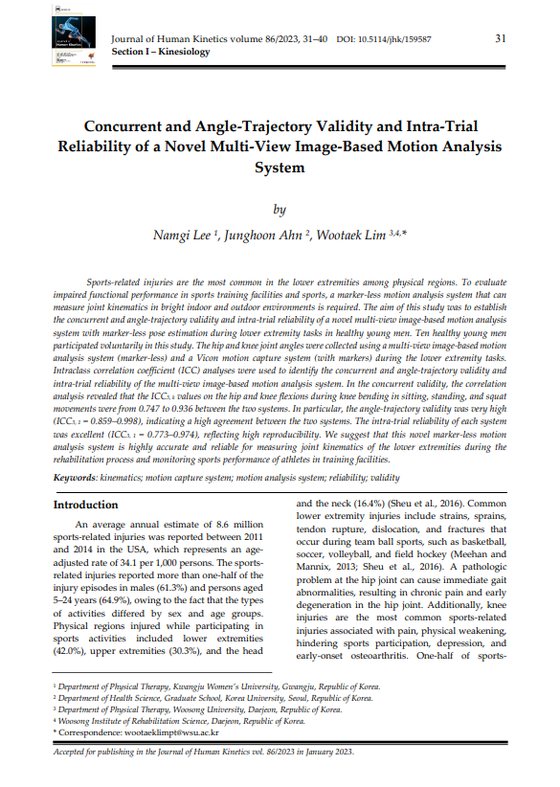
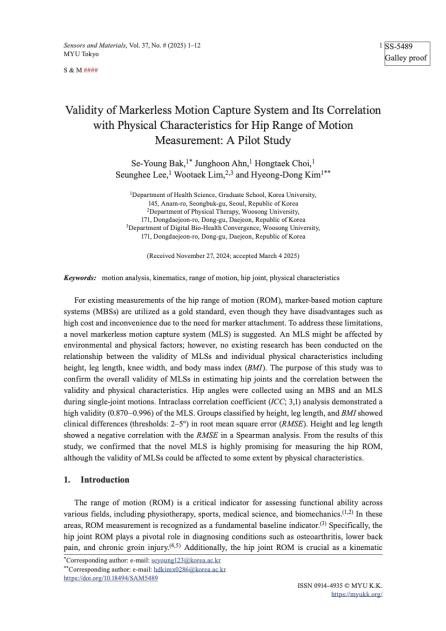
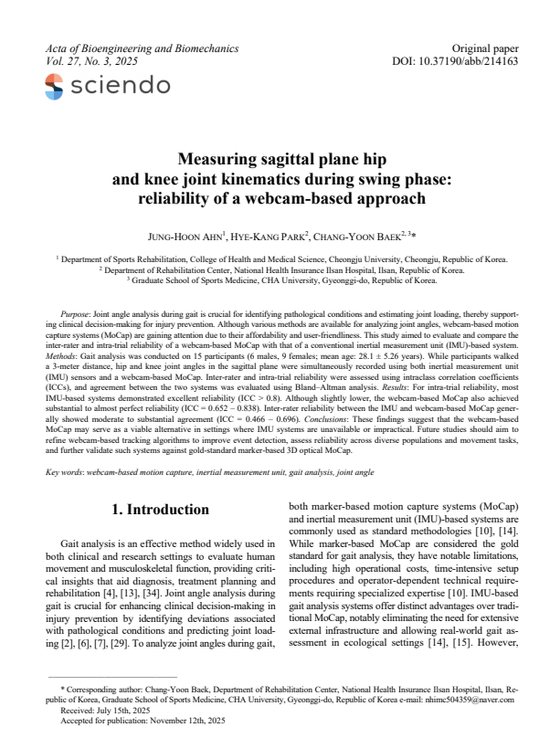
Six SCI(E) papers, in Sensors, Applied Sciences, Journal of Human Kinetics, Medicine and more.
Real payback periods
Payback in three weeks to three months
Not projections: based on actual assessment volumes. Hospital names are initials per contract.
Bundang Hospital B passes 1,500 assessments a month
At a single hospital, in one month.
- Bundang Hospital B
- Ansan Hospital O
- Seoul Hospital C
Bundang Hospital B
266% in three weeks
266% of the purchase price recovered in three weeks, from 1,278 assessments. Monthly volume passed 1,500 as of Sep 2026.
- Payback
- 266%
- Time to payback
- 3 weeks
Ansan Hospital O
193% in two months
Payback rose from 62% to 193% in two months; monthly volume from 182 to 422 (Sep 2026).
- Payback
- 193%
- Time to payback
- 2 months
Seoul Hospital C
100% in three months
Full purchase price recovered in three months. Monthly volume reached 312 as of Sep 2026.
- Payback
- 100%
- Time to payback
- 3 months
No upfront cost. Profit from the first patient.
- Upfront cost
- KRW 0. Subscription, no equipment to buy
- Billing
- Per assessment; rate drops as volume grows
- Term
- 36 months, monthly minimum
- Break-even
- No upfront spend. Profit from the first patient
Rates and monthly minimums depend on hospital size and joints in use. We cover them in a consultation.
Why 4DEYE
Why choose 4DEYE?
Assessment devices stop at evaluation. Rehab apps prescribe without assessing. Only both turn one assessment into a cycle of care.
Assessment devices only
Posture and basic range of motion
The loop breaks
Stops at assessment. With no link to treatment, the data is used once and lost.
4DEYE
Measure, prescribe, re-measure
The loop closes
Each prescription comes from that person’s measured compensation, and results feed the next measurement.
Rehab app only
Same protocol exercises for everyone
The loop breaks
Prescribes without assessing what to fix. Progress relies on self-report.
Categories based on public company materials, as of 2026. Specifications may change.
Who it is for
Care in hospitals. Prevention in sports, schools, industry and care facilities.
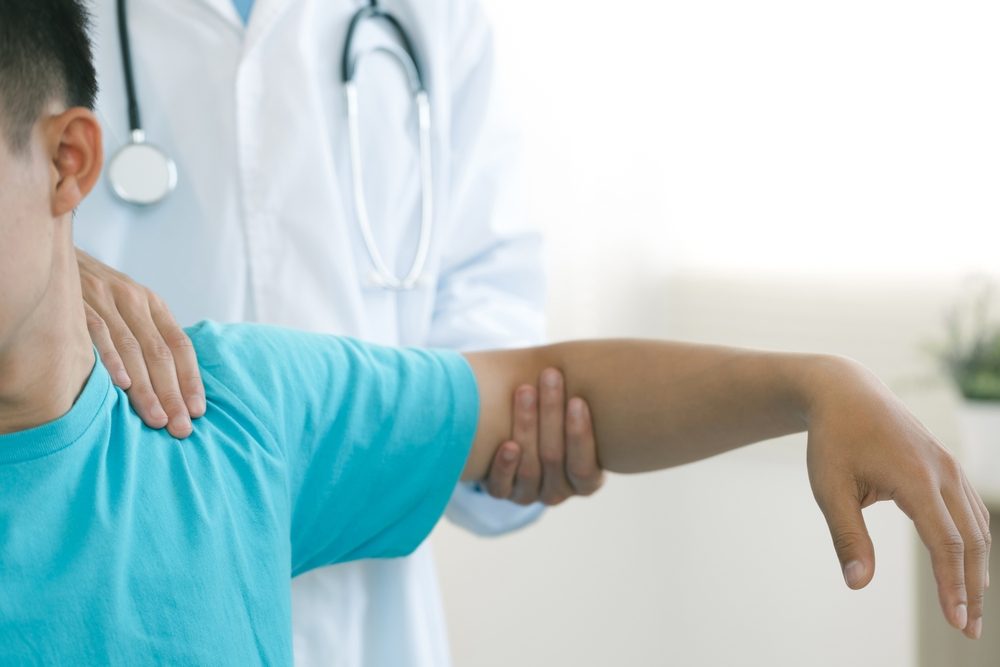
Clinics and hospitals
No equipment to buy: a subscription, profitable from the first patient. Five-minute assessments, half a day of training, your existing rehab room.
Read more
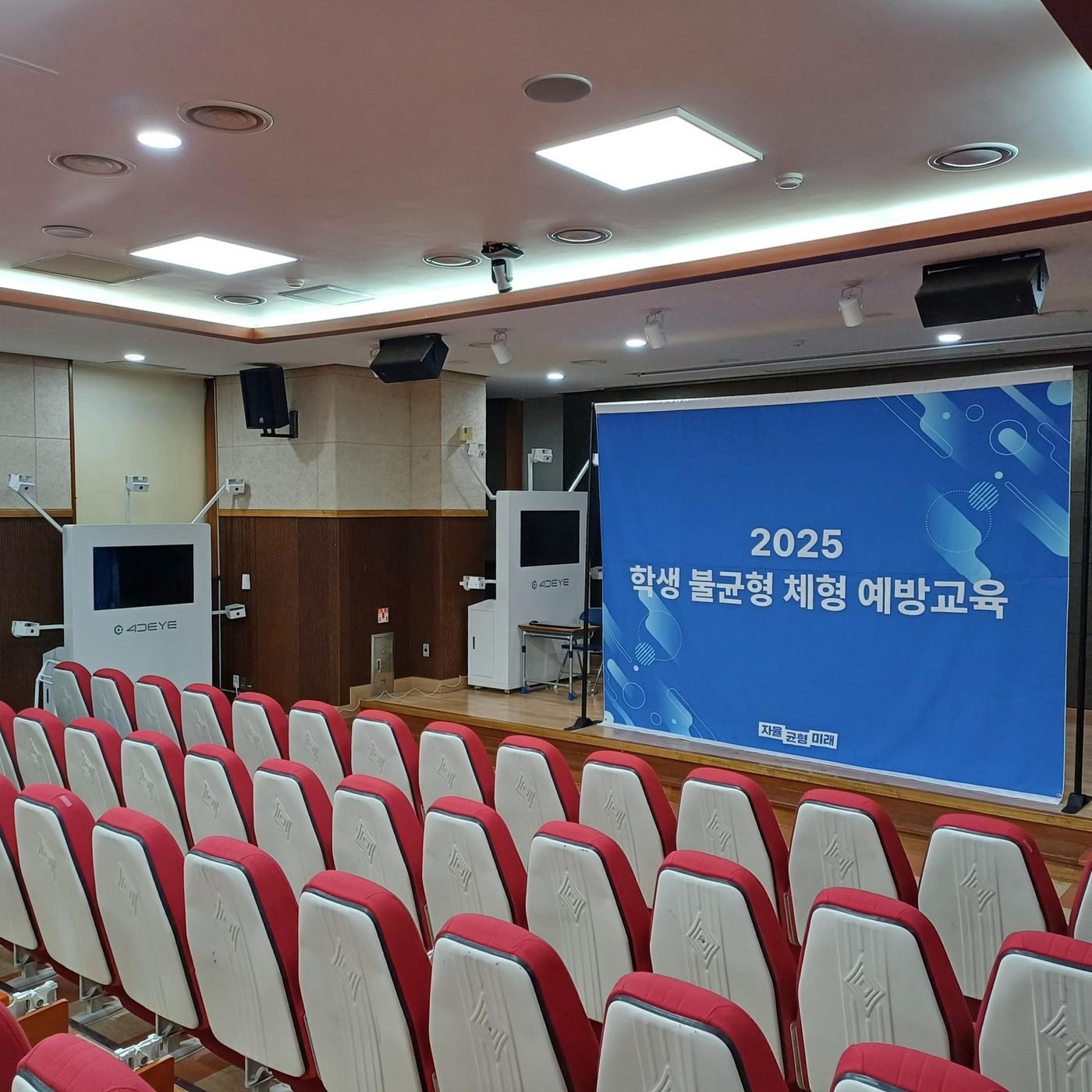
Sports, schools, workplaces, seniors
Sports, education, industry and care facilities. A 3-second posture check records posture type, with no medical judgement. A personalized exercise app does the rest.
Read more
Features by use
Clinical motion analysis is different, feature by feature
The wellness edition for sports, schools, industry and senior care involves no medical judgement: it offers posture and posture type data, growth prediction, a personalized exercise app, and injury-risk screening in sports. Joint-by-joint motion analysis, clinical use and claims, and digital therapeutic prescription are clinical edition only.
| Feature | Clinical edition 4DEYE Dx (MFDS-approved medical device) / DTx Clinics and hospitals · rehab medicine · orthopedics · physiotherapy | Wellness edition For sports, schools, industry and seniors · non-medical Athletes · students · workers · older adults |
|---|---|---|
| Motion analysis · clinical use | ||
Single- and multi-joint motion analysis Range of motion · compensation · left–right asymmetry | Included | Not included |
Movement screening Injury-risk screens such as Y-balance and overhead squat · sports only | Included | Included |
Tight and weak muscles · risk grade Findings that support clinical judgement | Included | Not included |
Hand function test Detailed finger, wrist and elbow analysis · separate attachment | Separate subscription | Not included |
Report linked to PACS and claims Connected to medical records and billing | Included | Not included |
| Treatment · follow-through | ||
Digital therapeutic prescription Clinician-prescribed · camera scoring · confirmatory trial evidence | Included | Not included |
Personalized exercise app Exercise matched to results · adherence tracking | Included | Included |
| Posture | ||
Current posture measurement 3 seconds · coronal, sagittal and transverse alignment | Included | Included |
Posture type classification Forward head · rounded shoulders · pelvic tilt and more | Included | Included |
Measurement data · trends Individual and group records on one yardstick | Included | Included |
| Growth · vital signs | ||
Growth prediction model Growth trends for students · in use in schools | Included | Included |
Heart rate · respiratory rate Contactless, via remote photoplethysmography (rPPG) from camera video | Coming soon | Coming soon |
Heart rate variability (HRV) · stress index Based on LF/HF and SDNN | Coming soon | Coming soon |
Blood pressure · oxygen saturation Collected during the same session | Coming soon | Coming soon |
Clinical edition
4DEYE Dx (MFDS-approved medical device) / DTx
Wellness edition
For sports, schools, industry and seniors · non-medical
Motion analysis · clinical use
Single- and multi-joint motion analysis
Range of motion · compensation · left–right asymmetry
IncludedNot includedMovement screening
Injury-risk screens such as Y-balance and overhead squat · sports only
IncludedIncludedTight and weak muscles · risk grade
Findings that support clinical judgement
IncludedNot includedHand function test
Detailed finger, wrist and elbow analysis · separate attachment
Separate subscriptionNot includedReport linked to PACS and claims
Connected to medical records and billing
IncludedNot included
Treatment · follow-through
Digital therapeutic prescription
Clinician-prescribed · camera scoring · confirmatory trial evidence
IncludedNot includedPersonalized exercise app
Exercise matched to results · adherence tracking
IncludedIncluded
Posture
Current posture measurement
3 seconds · coronal, sagittal and transverse alignment
IncludedIncludedPosture type classification
Forward head · rounded shoulders · pelvic tilt and more
IncludedIncludedMeasurement data · trends
Individual and group records on one yardstick
IncludedIncluded
Growth · vital signs
Growth prediction model
Growth trends for students · in use in schools
IncludedIncludedHeart rate · respiratory rate
Contactless, via remote photoplethysmography (rPPG) from camera video
Coming soonComing soonHeart rate variability (HRV) · stress index
Based on LF/HF and SDNN
Coming soonComing soonBlood pressure · oxygen saturation
Collected during the same session
Coming soonComing soon
Contactless vital signs are developed and launching soon; the wellness edition shows them as reference indicators without medical judgement. Hand function testing needs a separate attachment and subscription.
Users and partners
Already in use and working with us
Clinical and research
Hospitals and clinics







Professional sport



Public and education








Overseas partners
 Australia
 Canada
 Singapore
Clinical and public partners
Research in hospitals, results in the field
University hospital teams and an open lab validate performance and safety; a public education programme tests it in the field.


Prof. Lee Sang-heon’s team, Rehabilitation Medicine, Korea University Anam Hospital
Clinical site 1 · PI, non-specific low back pain DTx trial under way
Photo: Korea University Medicine PR Manager, CC BY-SA 4.0, Wikimedia Commons


Prof. Lee Byung-hoon’s team, Orthopaedic Surgery, Gachon University Gil Medical Center
Clinical site 2 · PI, chronic knee pain DTx trial completed
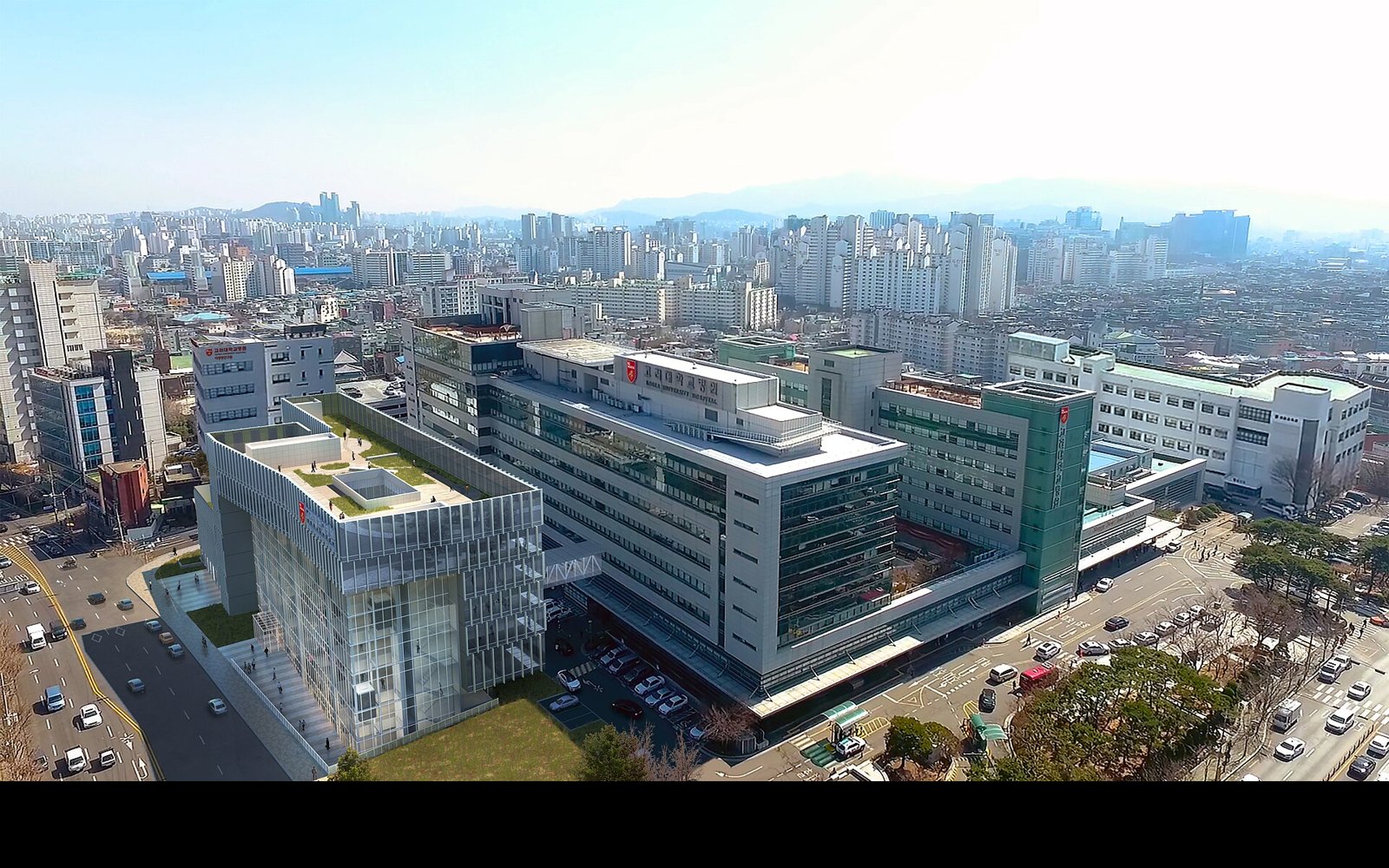

Open Lab, Korea University Guro Hospital
Research lab · R&D and clinical advice
Photo: Korea University Medicine PR Manager, CC BY-SA 4.0, Wikimedia Commons

Gyeonggi Provincial Office of Education
2024–present · student postural imbalance programme
Photo: SYM Healthcare · student postural imbalance prevention class
Organizations we’ve worked with




















Start putting numbers on movement
Clinics, sports, schools, workplaces or senior care: see a live demo and the operating terms.